



Starting a handyman business involves more than doing good work. A new owner must also respond to enquiries, prepare quotes, manage schedules and cash flow, and make sure every job is within their licence and capability.
For tradespeople considering going out on their own, the first three months are a transition from skilled worker to business operator. With a MasterFix franchise, that transition is supported by training, marketing and operating systems. Those supports can help establish the business, but they do not remove the owner’s responsibility for winning work, delivering it well and making sound business decisions.
Here is a practical look at what the first 90 days can involve.
Before day one: make an informed decision
Before starting, get clear on the investment and the terms of the opportunity. MasterFix currently lists foundation franchise opportunities from $25,000 + GST, with the standard fee listed at $49,000 + GST. Availability and conditions may apply, so confirm the current offer directly and review the franchise documents carefully.
The franchise fee is only one part of a business budget. Consider working capital, vehicle and tool costs, insurance, fuel, accounting and your personal living expenses while the business builds its pipeline. Ask for a full explanation of any ongoing fees and the support they fund. Review the disclosure document and agreement with independent legal and financial advisers before signing.
You will also need to understand what work you can legally undertake in your state or territory. Licensing and permit requirements depend on the type and value of work, and rules can differ between jurisdictions. Use the Australian Government’s ABLIS business licence and permit search and check requirements with the relevant state regulator.
Days 1–30: build the operating base
The first month is usually about getting ready to trade, rather than filling every day with jobs. That means setting up the practical foundations: business registrations, banking, bookkeeping, insurance, vehicle, tools and customer communication processes.
MasterFix franchise partners complete training through the MasterFix Academy. The company describes its training as covering technical skills as well as quoting and estimating, customer service, operations, marketing fundamentals and business management. The aim is to help new operators apply trade skills within a consistent business process.
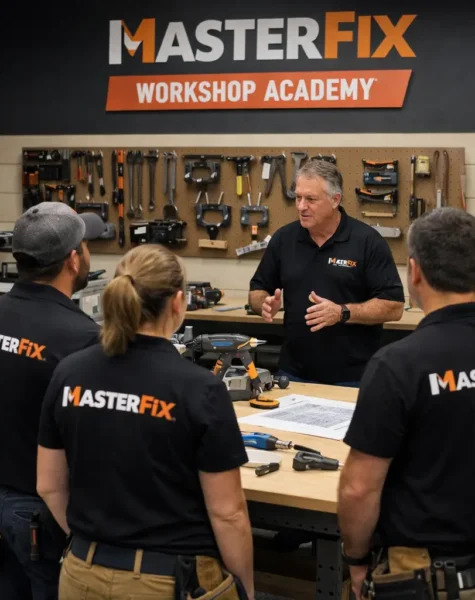
In practice, you will be learning how to scope a job, price it, explain what is and is not included, schedule the work and keep the customer updated. These steps matter whether you are fixing a door, completing general maintenance or quoting a larger renovation. A clear written quote and agreed scope can prevent misunderstandings later.
You will also need to know where your service boundaries sit. If a customer asks for work that requires a licence you do not hold, you will need to decline it, refer it to an appropriately licensed trade or arrange a compliant subcontracting solution. Confirm the rules before advertising or accepting that type of work.
MasterFix also identifies supplier relationships including Bunnings Trade, Bosch, Kaboodle and Taubmans. These relationships can support purchasing and access to products, but you should confirm what they mean in practical terms for your territory and business.
Days 31–60: turn enquiries into a working pipeline
Once your business is ready to take work, the focus shifts to handling enquiries well. MasterFix describes marketing activity across channels including Google advertising, social media, local campaigns, search engine optimisation, website enquiries, referral platforms, partnerships and national accounts. The purpose is to generate customer enquiries for franchise partners.
An enquiry is an opportunity, not a confirmed booking. The owner still needs to respond promptly, understand the customer’s requirements, decide whether the work is suitable, prepare a clear quote and follow up. The ability to manage that process is part of running a handyman business.
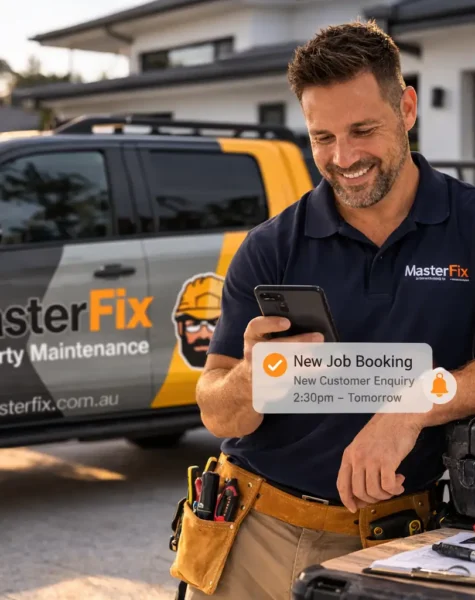
In the early weeks, keep track of the details that help you understand what is working: where enquiries came from, how quickly you responded, how many quotes you issued and which jobs were accepted. Record travel time, material costs, job duration and outstanding invoices too. Being busy is not the same as being profitable, and these records help you price work more accurately over time.
It can also help to build a balanced job mix. Smaller maintenance jobs may provide opportunities to establish local relationships and demonstrate reliable service. Larger projects, such as bathroom or kitchen work, require careful scoping, scheduling and coordination. Take on work that fits your capability, available time and licensing requirements.
MasterFix’s marketing and lead generation page sets out the channels it uses to generate enquiries. Ask how those activities apply to your territory, how enquiries are handled and what you are expected to do when a lead arrives. Clear expectations are important: marketing can support customer acquisition, but no campaign can guarantee a particular number of bookings or level of income.
Days 61–90: look for repeatability
By the third month, the goal is not simply to pack the calendar. It is to see whether you can deliver jobs consistently, quote with a sound understanding of costs and build a pipeline that can be managed week to week.
Review your figures regularly. Look at enquiry and quote volumes, accepted jobs, gross margin, time spent travelling, payment delays, customer feedback and any rework. If a type of job takes longer than expected or routinely produces little margin, investigate why before continuing to quote it the same way.
This is also a useful period to build professional relationships with property managers, real estate agencies, strata managers and other potential referral partners. A concise description of your services, service area, insurance and licence details can help them understand when to refer work to you. Keep communication realistic and follow through on commitments. Reliability is established through repeated actions, not a business name alone.
MasterFix’s support, systems and guidance include operational systems for quoting, job management and customer communication, along with ongoing guidance and network support. Use these resources to identify process improvements, discuss challenges and learn from other operators. A franchise system can provide structure, but the owner remains responsible for decisions and customer outcomes.
What support can, and cannot, do
MasterFix says it has a decade of franchise experience and reports 97% franchise partner retention and 95% satisfaction. These are company-reported figures, not a forecast of an individual franchisee’s results. Ask how the figures are calculated and speak with current or former franchise partners as part of your due diligence.
MasterFix founder and CEO Wayne Morris says: “We believe great people deserve great business opportunities.” The franchise proposition combines that aim with Academy training, marketing activity and operational support. For a tradesperson, the practical value lies in how those supports work day to day, and whether the model and costs make sense for your circumstances.
The Australian Government’s business.gov.au guide to starting a business is also a useful reference for registration and business setup requirements. Use it alongside professional advice and your franchise documentation.
A realistic measure of your first 90 days
A sound start does not have to mean hiring staff or taking on major renovations immediately. By the end of three months, a useful measure of progress is whether you can:
- Explain your service area and the types of work you are equipped and authorised to undertake.
- Respond to enquiries, prepare clear quotes and follow up consistently.
- Track job costs, invoices and cash flow.
- Deliver work to a professional standard and communicate clearly with customers.
- Identify which services and lead sources are contributing to a viable pipeline.
For tradespeople comparing handyman franchise opportunities, the key question is not only what support is offered, but how it fits the work you want to do and the business you want to build. The first 90 days are a period of learning and adjustment. Training, marketing and systems can provide a framework; consistent service and sound business management are what turn that framework into an operating business.