For skilled tradespeople across Australia evaluating their next career move, the decision to launch an independent handyman venture or invest in a property maintenance franchise represents a critical crossroads. With the national trades and property renovation sector valued at over $1.4 billion and experiencing steady annual demand, operators face distinct strategic choices regarding capital allocation, operational risk, and long-term scalability.
Understanding the structural differences between an independent sole-trader model and a structured franchise network is essential for tradespeople seeking sustainable profitability in a competitive market.
Market Overview and Regulatory Realities
The Australian property maintenance sector spans minor residential repairs, bathroom renovations, deck refurbishments, and routine strata upkeep. Across all business models, operators must navigate state-specific regulations governing trade work. For example, jurisdictional thresholds dictate unlicensed minor maintenance limits: such as $3,300 in Queensland and $5,000 including GST in New South Wales: above which specialised builders' licences are mandatory.
Whether operating independently or under a corporate brand, compliance with Australian Business Number (ABN) registration, Goods and Services Tax (GST) thresholds at $75,000 in annual turnover, and public liability insurance remains compulsory. However, the mechanism through which operators meet these regulatory demands, secure customer leads, and manage business administration differs significantly between independent startups and established franchise networks.
The Independent Handyman Business: Autonomy and Administrative Burden
Establishing an independent handyman business offers maximum operational control. Approximately 86% of independent sole traders enter the market with minimal initial capital, relying on existing hand tools, a reliable vehicle, and personal networks to secure early contracts.
Advantages of Going Independent
- Complete Autonomy: Independent operators retain total control over pricing structures, service offerings, working hours, and geographic service areas.
- Low Initial Capital: Without franchise entry fees or ongoing royalty deductions, initial overheads are confined to vehicle expenses, tool procurement, insurance, and basic marketing.
- Direct Revenue Retention: All gross income generated goes directly to the operator, subject only to standard tax obligations.
Challenges and Operational Risks
Despite the appeal of complete independence, independent operators frequently encounter severe bottlenecks in customer acquisition and administrative management. Without a dedicated marketing apparatus, sole traders must allocate significant non-billable hours to digital advertising, quote preparation, and client follow-ups.
"The primary failure point for independent tradespeople is not a lack of technical craftsmanship, but the absence of predictable lead generation and robust administrative systems," notes industry analyst Marcus Vance. "When an operator spends twenty hours a week chasing invoices and generating quotes, revenue generation stalls."

Property Maintenance Franchises: Structured Systems and Scalability
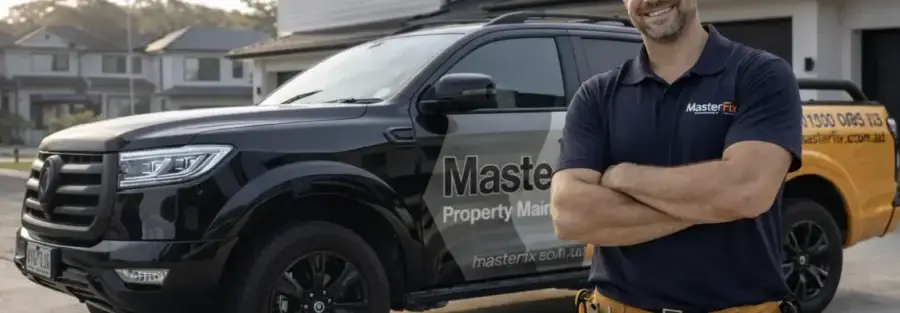
In contrast to sole-trader ventures, property maintenance and renovation franchises: such as the networks built over the past decade by MasterFix: provide a turnkey business model designed to mitigate early operational friction. Franchisees trade a portion of their gross margins for established brand equity, corporate purchasing power, and centralised customer acquisition engines.
Key Benefits of Franchise Partnerships
- Centralised Lead Generation: Structured marketing campaigns deliver a continuous stream of customer inquiries, allowing franchisees to focus on on-site delivery rather than cold acquisition.
- Comprehensive Training and Support: Programs like the MasterFix Academy provide practical instruction in technical skills, advanced quoting protocols, and business management.
- Supplier Partnerships: Established supply chain agreements with major entities such as Bunnings Trade, Bosch, Kaboodle, and Taubmans reduce material acquisition costs and improve project margins.
- Recurring Commercial Contracts: Franchise networks often secure high-value commercial and strata maintenance contracts that are largely inaccessible to independent sole traders.
"Our objective is to remove the administrative guesswork from trade entrepreneurship," states Wayne, CEO of MasterFix. "By providing proven operational frameworks, comprehensive safety training, and constant lead generation, our franchise partners achieve sustainable profitability much faster than independent operators navigating the market alone."

Financial and Risk Comparison
Evaluating the financial commitment requires a direct comparison of upfront expenditures and ongoing operational costs.
Independent startups typically require an initial capital outlay ranging from $5,000 to $15,000 for basic equipment, vehicle setup, and initial advertising. However, unexpected costs arising from administrative errors, pricing mistakes, or extended marketing dry spells can erode operating capital quickly.
Franchise entry costs vary depending on the network tier. For instance, foundation franchise opportunities are available from $25,000 plus GST, compared to standard entry points at $49,000 plus GST. While this requires higher initial capital than a bare-bones independent setup, the inclusion of structured operating systems, proven quoting tools, and ongoing business coaching significantly reduces the statistical risk of business failure. Network retention rates across established property maintenance groups often exceed 95%, underscoring the long-term viability of the franchise model.

Strategic Decision Framework: Which Path Suits Your Goals?
Selecting between an independent handyman business and a property maintenance franchise depends on an individual's professional background, risk tolerance, and growth objectives.
Tradespeople should consider an independent venture if they possess extensive business management experience, prefer absolute control over brand identity, and have sufficient capital to endure months of self-directed marketing and administrative trial-and-error.
Conversely, a franchise partnership is ideally suited for skilled tradespeople who want to transition smoothly from employee status to business ownership without building operating systems from scratch. Those who value ongoing mentorship, reliable lead flow, and structured technical training will find that franchise networks offer a faster, more secure pathway to enterprise expansion.
To explore structured pathways in property maintenance and renovation, review the comprehensive overview on the MasterFix Franchise Opportunity page, or learn more about company values and leadership on the About MasterFix portal. Further details regarding operational support are also outlined at The MasterFix Opportunity.

Conclusion
Both independent handyman businesses and property maintenance franchises operate within a resilient, high-demand Australian market. While independent operations offer unfettered autonomy and low startup costs, property maintenance franchises deliver the critical advantages of brand trust, centralized lead generation, and robust operational support. For skilled tradespeople committed to long-term financial security and business scalability, aligning with an established franchise network offers a proven, risk-mitigated route to sustainable success.