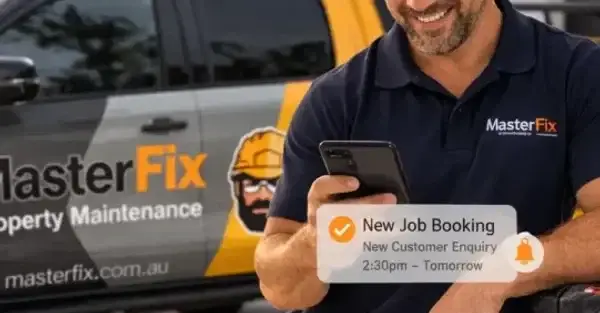
The Australian property maintenance and renovation sector enters 2026 facing an unprecedented convergence of robust consumer demand and persistent skilled labor shortages. Residential property owners across metropolitan and regional markets increasingly require reliable, punctual tradespeople for everything from minor repairs to comprehensive home extensions and bathroom renovations. For independent tradespeople and ambitious handymen, transitioning from tool-carrying technicians to enterprise owners presents a significant economic opportunity. However, establishing a resilient operation requires rigorous planning, structured compliance, and robust operational frameworks.
Industry data indicates that modern homeowners and property managers prioritize punctuality, quality workmanship, and transparent communication. To meet this market demand efficiently, establishing a business requires a methodical approach. This five-step blueprint outlines the essential operational, legal, and strategic milestones required to successfully launch and scale a property maintenance business in Australia in 2026.
Step 1: Define Service Scope and Navigate Regulatory Compliance
The foundation of any successful trade or handyman business begins with a clear legal definition of service offerings. In Australia, no uniform "handyman licence" exists across states and territories. Instead, state-based building authorities enforce strict dollar-value thresholds and licensing boundaries for specialized work.
For instance, non-structural property maintenance work typically falls below statutory licensing triggers if individual job values remain under state-specific limits: such as $3,300 in Queensland or $5,000 including GST in New South Wales. Qualified tradespeople and general handymen must strictly adhere to these limits, ensuring they do not perform regulated electrical, plumbing, gas, or structural building tasks without holding the corresponding trade licence.
"Operating within statutory guidelines protects both the consumer and the business," notes Wayne, Chief Executive Officer at MasterFix. "Tradespeople entering the market must recognize that clarity in scope prevents costly compliance breaches and establishes immediate credibility with corporate property managers and residential clients alike."
When scaling operations, business owners often partner with licensed subcontractors or leverage structured franchise systems like MasterFix Franchise Opportunities to deliver comprehensive property renovation services without compromising regulatory compliance.

Step 2: Establish Corporate Structure and Financial Infrastructure
Selecting the appropriate legal and financial structure dictates long-term tax efficiency and asset protection. Most independent handymen initiate operations as sole traders due to minimal setup costs and administrative simplicity. However, as turnover increases and teams expand, transitioning to a Proprietary Limited (Pty Ltd) company structure provides enhanced liability protection and corporate credibility.
Essential administrative milestones include:
- Australian Business Number (ABN): Mandatory for all commercial invoicing and tax reporting.
- Business Name Registration: Required via ASIC if trading under any name other than the individual proprietor's legal name.
- Goods and Services Tax (GST) Registration: Mandatory once projected annual turnover reaches or exceeds $75,000.
- Dedicated Business Banking: Separating personal and professional finances to streamline bookkeeping and tax preparation.
Establishing these baseline structures early ensures compliance with the Australian Taxation Office (ATO) and simplifies future business valuations.
Step 3: Secure Comprehensive Insurance and Risk Management
Risk mitigation is non-negotiable in the property maintenance sector. Working on residential and commercial premises exposes operators to potential property damage, personal injury, and equipment loss.
Before securing the first commercial contract, business owners must procure:
- Public Liability Insurance: Essential for operating on customer properties. Real estate agencies, strata managers, and commercial clients routinely mandate a current Certificate of Currency with coverage up to $10 million or $20 million.
- Tools and Equipment Insurance: Safeguards high-value power tools and diagnostic equipment against theft or transit damage.
- Commercial Vehicle Insurance: Covers utility vehicles and vans utilized for daily site visits and material transport.
- Personal Accident and Income Protection: Ensures financial continuity if injury temporarily halts field operations.

Step 4: Implement Systematic Lead Generation and Quoting
Historically, independent handymen relied exclusively on word-of-mouth referrals. While personal recommendations remain valuable, modern businesses require predictable, data-driven customer acquisition channels to maintain consistent cash flow.
A professional digital footprint must include:
- Optimized Google Business Profile: Configured as a service-area business to capture high-intent local search traffic without publicizing residential addresses.
- Professional Landing Page or Website: Showcasing core services, geographic coverage, licensing credentials, and customer testimonials.
- Structured Quoting Systems: Implementing transparent pricing models: whether hourly rates or fixed project quotes: to reduce conversion friction.
Many independent operators encounter operational bottlenecks when balancing field work with administrative tasks like lead follow-up. Franchise networks mitigate this challenge by providing centralized marketing campaigns that generate constant customer enquiries, allowing technicians to focus entirely on quality execution. Detailed insights into operational support are available through The MasterFix Opportunity.
Step 5: Leverage Operational Frameworks and Industry Partnerships
Scaling from a solo operator to a profitable enterprise requires proven systems, continuous skills development, and reliable supply chain partnerships. Industry analysis indicates that businesses utilizing structured operating systems achieve higher client retention and profitability than those operating in isolation.
Partnering with established industry networks provides access to preferred supplier agreements: such as Bunnings Trade, Taubmans, and Bosch: significantly reducing material overheads. Furthermore, comprehensive training initiatives like the MasterFix Training Academy equip trade professionals with advanced technical proficiencies, quoting methodologies, and business management strategies.
"Sustainable growth in property maintenance is driven by consistency," explains Wayne. "By providing structured operating frameworks, continuous technical training, and reliable lead generation, we enable skilled tradespeople to build resilient, high-performing businesses."

Conclusion
Starting a handyman business in Australia in 2026 offers exceptional financial and professional rewards for tradespeople committed to high standards of workmanship and operational discipline. By systematically navigating legal compliance, securing appropriate insurance, deploying effective digital marketing, and leveraging proven franchise partnerships, independent operators can successfully transition into enterprise owners.
For tradespeople seeking to accelerate their growth with institutional backing, structured operating systems, and proven profitability models, exploring established partnership opportunities provides a clear pathway to long-term commercial success. Learn more about joining the network by visiting MasterFix About Us.