Choosing between handyman franchise opportunities requires more than comparing the franchise fee. The entry price is only one part of the commercial model. Lead generation, training, supplier arrangements, territory rights, ongoing fees and exit conditions can have a greater effect on the viability of the business.
This guide compares the seven factors that matter most when assessing a handyman franchise Australia opportunity, using publicly available information reviewed in September 2026.
1. Compare the total entry cost, not the headline fee
A franchise advertised at $25,000 may not include a vehicle, tools, insurance, working capital, software, marketing launch costs or professional advice. Ask for a complete start-up budget before comparing brands.
Publicly listed entry costs in Australia currently sit broadly within these bands:
| Franchise category | Indicative publicly listed entry cost, excluding GST |
|---|---|
| Entry-level handyman networks | Approximately $22,490–$25,000 |
| Established handyman networks | Approximately $30,000–$60,000 |
| Building and property maintenance divisions | Approximately $35,000–$80,000 |
| MasterFix foundation opportunity | $25,000+ |
| MasterFix standard opportunity | $49,000 |
For example, Handyman of Australia publicly lists a $22,490 + GST franchise fee, while public franchise directory data places Hire A Hubby in the $30,000–$60,000 range. Selected Jim’s Handyman listings show an initial investment of approximately $20,000, although additional setup costs still need to be confirmed.
These figures are not directly interchangeable. Some packages include equipment and marketing materials, while others primarily represent the franchise fee. A listing described as a property maintenance business for sale may also involve an existing customer base, staff, vehicles or lease commitments.
Request a written schedule covering:
- Franchise fee and GST
- Vehicle and signage
- Tools and equipment
- Insurance and licences
- Software and administration
- Initial marketing
- Training travel and accommodation
- Working capital for the first three to six months
- Royalties, marketing contributions and other recurring fees
2. Establish whether leads are supplied
“Marketing support” can mean anything from brand guidelines to a centralised system that actively generates customer enquiries. The distinction is commercially important.
Ask each franchisor for historical data relevant to the territory you are considering:
- How many enquiries are generated per month?
- What percentage becomes a site visit or quote?
- What percentage of quotes becomes paid work?
- What is the average job value?
- Are leads allocated exclusively, shared or sold to multiple operators?
- Are franchisees charged per lead?
MasterFix states that its centrally funded marketing campaigns use Google advertising, social media, local area campaigns, search engine optimisation, website enquiries, referral platforms, referral partnerships and national accounts. The MasterFix marketing and lead generation service provides further detail.
The important point is not the number of channels listed. It is whether the franchisor can demonstrate how those channels translate into profitable work. Ask to see evidence and speak with current partners in territories similar to yours.

3. Audit the training curriculum and its providers
A short induction course is not the same as an operating education program. Review the curriculum, delivery method and post-launch support.
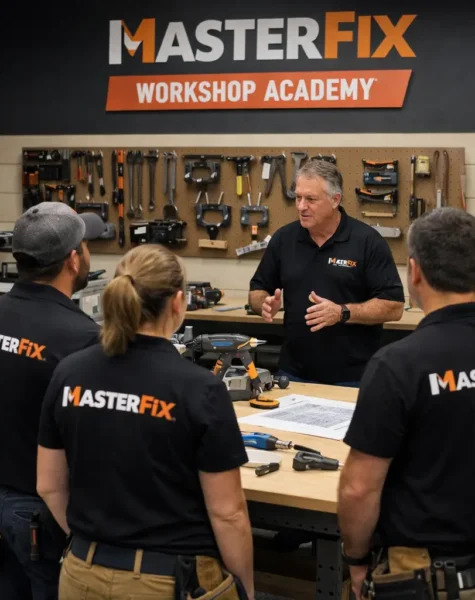
The MasterFix Academy covers quoting and estimating, customer service, operations, marketing fundamentals and business management. It also includes practical technical training delivered in a workshop environment by professional builders.
Ask:
- Who delivers each module?
- How many days are practical rather than theoretical?
- Does training cover quoting and margin control?
- Are licensing limits and safety procedures addressed?
- Is refresher training available?
- What support is provided when the first complex project is quoted?
Training should reflect the work the franchise partner is expected to deliver, including bathroom renovations, deck refurbishments, shower installations, home extensions and general handyman services.
4. Review supplier partnerships and rebate arrangements
Supplier relationships can influence pricing, product availability, technical support and gross margins. However, the existence of a partnership does not automatically mean that all benefits flow to the franchisee.
MasterFix identifies relationships with Bunnings Trade, Bosch, Kaboodle and Taubmans. Ask the franchisor:
- Is the arrangement a preferred supplier agreement or a formal discount program?
- Who receives rebates or volume incentives?
- Are franchisees required to buy through nominated suppliers?
- Can you use alternative products where appropriate?
- Are prices reviewed regularly?
- Do supplier relationships cover renovation categories as well as general repairs?
The answer should appear in the disclosure documents or be confirmed in writing.
5. Clarify territory, exclusivity and job allocation
A territory is only valuable if its boundaries and operating rights are clear. Confirm whether the territory is exclusive for all services or only for a particular customer channel.
Review:
- Geographic boundaries
- Population and household profile
- Existing franchisees nearby
- Reserved national or commercial accounts
- Online lead allocation rules
- Rights to service customers outside the territory
- Conditions for opening additional territories
- What happens if a neighbouring franchisee cannot accept a job
A brand may offer a large territory but retain the right to allocate leads centrally. Another may provide a smaller territory with stronger protection. Neither model is automatically better; the agreement must match your revenue assumptions.
6. Test retention and satisfaction claims
Retention and satisfaction statistics can indicate network stability, but they should not be accepted without verification.
MasterFix reports 97% partner retention and 95% satisfaction across nearly 100 partners nationally. The business also has a decade of franchise experience building its Australian network.
Prospective franchisees should independently test these figures by:
- Speaking with current and former franchise partners
- Asking why partners left
- Reviewing partner tenure by territory
- Comparing promised and actual lead volumes
- Checking complaints and disputes disclosed under the agreement
- Reviewing the ACCC Franchise Disclosure Register
A franchisor should be willing to provide reasonable access to franchisees for due diligence. Former partners can be particularly useful because they may explain the practical operation of fees, support and exit processes.

7. Read the exit terms before the entry terms
The franchise agreement determines how you leave, sell or transfer the business. Review it before paying a deposit.
Pay particular attention to:
- Agreement term and renewal rights
- Transfer and resale conditions
- Restraint-of-trade provisions
- Termination triggers
- Notice periods and default remedies
- Marketing fund obligations
- Royalty and software fees
- Personal guarantees
- Treatment of work in progress
- Customer and supplier ownership after termination
Under the ACCC Franchising Code of Conduct, prospective franchisees generally must receive the required disclosure documents, final franchise agreement and Code, then have at least 14 calendar days to consider them before signing or making a non-refundable payment. Obtain independent legal and financial advice during this period.
10 questions to ask every handyman franchisor
- What is the complete start-up cost, including GST and working capital?
- What ongoing royalties, marketing contributions and technology fees apply?
- How many qualified enquiries does an average comparable territory receive?
- What are the enquiry-to-quote and quote-to-sale conversion rates?
- What is the average job value and typical gross margin?
- Who delivers the technical and business training?
- What supplier rebates, discounts or restrictions apply?
- Is the territory exclusive, and how are online leads allocated?
- How many franchisees have left in the past three years, and why?
- What are the termination, restraint and resale conditions?
Common red flags
Be cautious if a franchisor:
- Focuses on the entry fee but will not provide a total investment schedule
- Makes income claims without supporting records
- Refuses access to current or former franchisees
- Describes marketing as “support” without measurable lead data
- Pressures you to sign before the 14-day disclosure period ends
- Cannot explain territory overlap
- Changes key commercial terms verbally
- Minimises the importance of working capital
- Uses satisfaction statistics without explaining how they were calculated
Where MasterFix sits in the comparison
MasterFix sits above a basic owner-operator handyman package in terms of entry cost, with a standard opportunity at $49,000 + GST and a foundation opportunity from $25,000 + GST. The model is designed for skilled tradespeople building a broader handyman and property renovation business rather than relying only on small repair jobs.
The comparison points are the structured operating systems, centrally funded marketing, MasterFix Academy training, supplier relationships and ongoing business guidance. Further information is available through the MasterFix franchise opportunity, support systems and guidance and training information.
The right decision will depend on territory economics, available capital, trade capability and the exact terms of the franchise agreement.
Frequently asked questions
How much does a handyman franchise cost in Australia?
Publicly listed prices in September 2026 range from approximately $22,490–$25,000 + GST for entry-level handyman networks, around $30,000–$60,000 for established handyman brands, and approximately $35,000–$80,000 for broader building and maintenance divisions. Total costs may be higher after equipment, vehicle, insurance and working capital are included.
Is a franchise better than starting a handyman business independently?
A franchise can provide brand recognition, lead generation, training, systems and supplier support. Starting independently provides greater control and may require less upfront capital. The better option depends on your business experience, cash reserves, appetite for administration and need for structured support. See the comparison of handyman business and property maintenance franchises.
What should I check before signing a franchise agreement?
Check the full investment, recurring fees, lead data, territory rights, training, supplier arrangements, partner feedback and exit terms. Have an experienced franchise lawyer and accountant review the disclosure documents and agreement.
What is a foundation franchise opportunity?
A foundation franchise opportunity is a lower-entry pathway into the MasterFix network, starting from $25,000 + GST. The precise inclusions, territory conditions, equipment requirements and ongoing obligations should be confirmed in the current information pack and disclosure documents.